
We all want the best for North Carolina’s children, and that starts with a strong foundation in education. But did you know that nearly 23% of third-grade students in traditional elementary schools were slated to repeat their grade last year due to low reading proficiency?
We invite you to read our latest report, Advancing Kindergarten Through Third-Grade Educational Equity in North Carolina, which highlights two undisputed facts about children’s reading skills in North Carolina:
- Children from all racial and economic groups need more school support to become proficient readers.
- There are gaping racial, ethnic, and economic disparities in students’ reading proficiency starting from a young age.
Although literacy gaps between economically advantaged and disadvantaged children and between White and Black children are evident when they begin kindergarten, research clearly shows that these gaps grow wider during their first few years of school. However, there is hope because literacy experts agree that there are in-school solutions that can alleviate out-of-school disparities in exposure to family and community resources that foster literacy.
Figures 7.3 and 7.4 from the report enable you to compare racial disparities at kindergarten entry and at the end of third-grade, and see that a stark racially patterned gap emerges. Figure 7.3 shows the percentage of students in each school who score as being ready for kindergarten, and Figure 7.4 shows the percentage of third-grade students who are reading proficient.
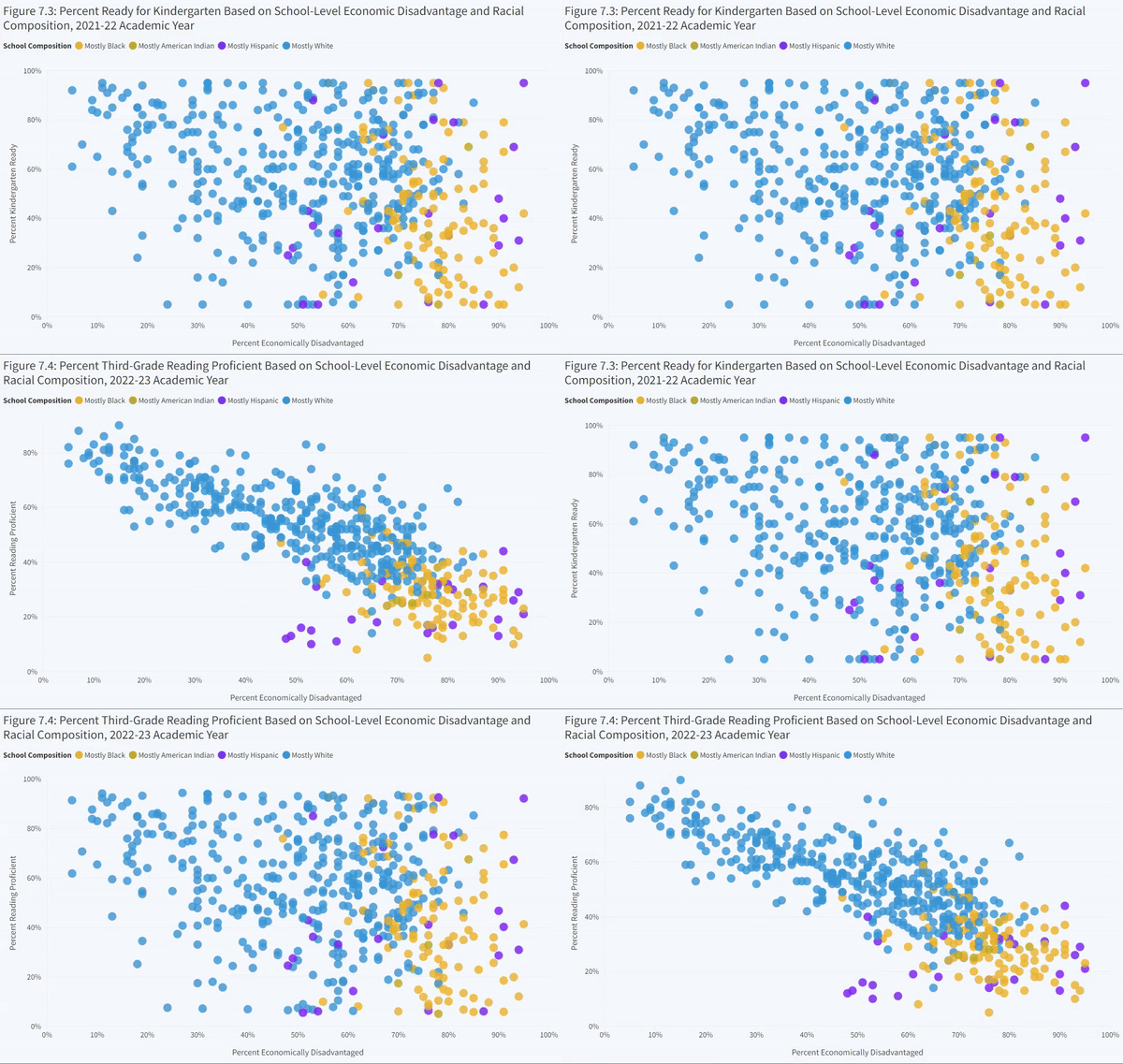
There is a clear shift in the distribution of schools from Figure 7.3 to Figure 7.4 based on racial composition. At kindergarten entry, school racial composition is somewhat but not strongly associated with kindergarten readiness. However, by the end of third-grade, mostly White schools are significantly more likely to have higher levels of reading proficiency, and mostly Black schools are significantly more likely to have lower levels of reading proficiency.
North Carolina is investing heavily in ensuring that children recover learning lost during pandemic school closures and that literacy instruction is aligned with the science of reading to give children the best chance of developing strong literacy skills. It is critical that North Carolina also invests in educational resource equity to ensure that children who have historically received the fewest educational resources and had the poorest educational outcomes receive the quality and intensity of reading instruction needed to become proficient readers.
Read the report to learn more >>>
About the North Carolina Early Childhood Foundation
The NC Early Childhood Foundation is driven by a bold – and achievable – vision: Each North Carolina child has a strong foundation for life-long health, education, and well-being, supported by a comprehensive and equitable care and education system, from prenatal through third grade. We build understanding, lead collaboration, and advance policies to ensure each North Carolina child is on track for lifelong success by the end of third grade.